When planning a new patio or outdoor surface, one of the most common questions homeowners ask is:
Should I choose pavers or concrete?
Both options offer durability and visual appeal, but they differ in performance, maintenance, cost, and long-term value. Understanding the differences can help you choose the right solution for your outdoor space.
“Should I choose pavers or concrete?”
Understanding Concrete Patios
Concrete is a popular option due to its affordability and versatility. It can be poured into nearly any shape and finished in multiple styles, including smooth, broom-finished, stamped, or stained surfaces.
Benefits of Concrete
Lower initial installation cost
Clean, modern appearance
Customizable finishes and textures
Suitable for large, continuous surfaces
Considerations
Over time, poured concrete is prone to cracking due to soil movement, temperature changes, and settling. While control joints help manage cracking, repairs are often more visible and difficult to blend seamlessly.
Understanding Paver Patios
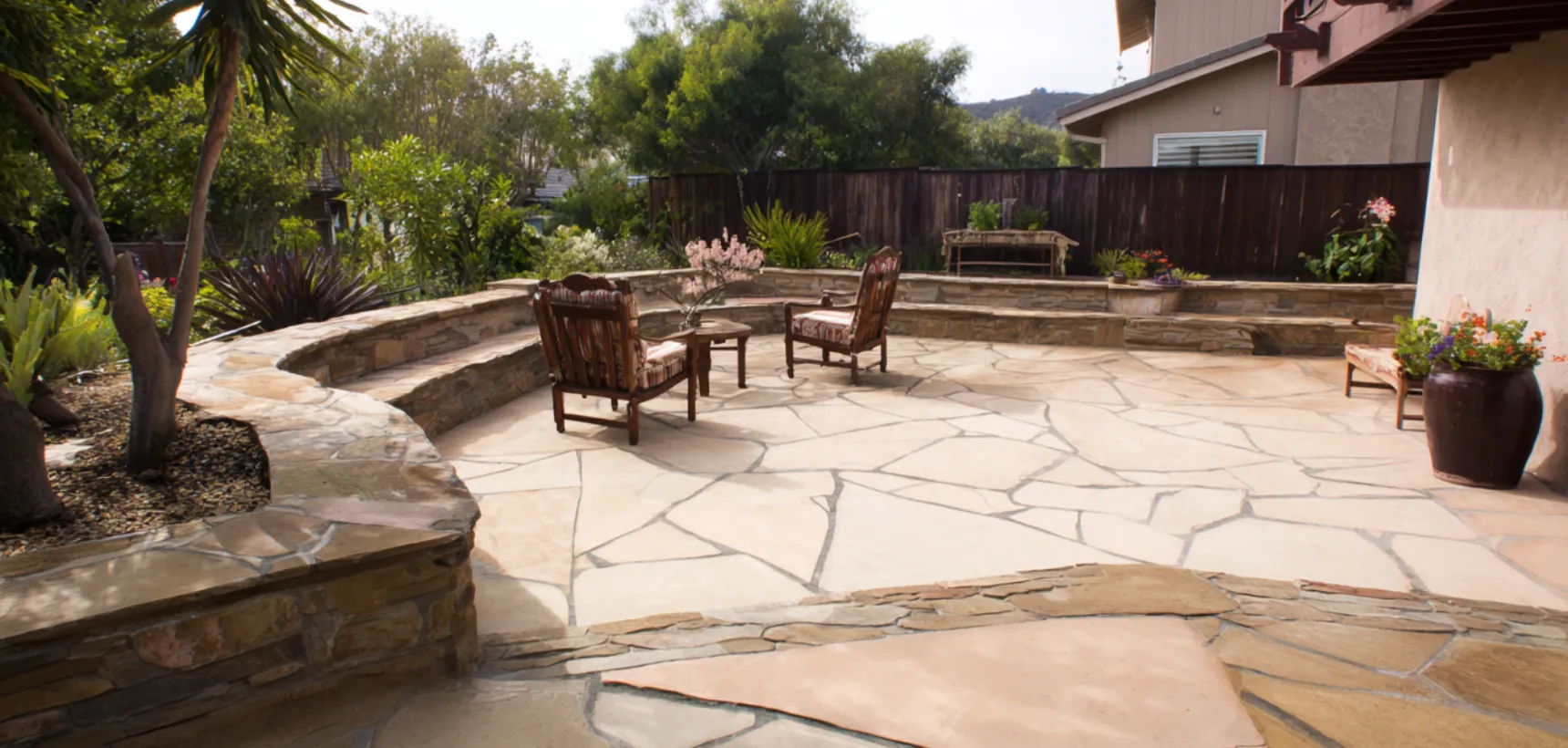
Pavers are individual interlocking stones installed over a compacted base. They come in a wide range of colors, textures, and patterns, allowing for highly customized designs.
Benefits of Pavers
Strong and flexible under ground movement
Less prone to cracking
Individual pieces can be replaced if damaged
Slip-resistant options available
Higher-end, premium appearance
Because pavers are installed in sections rather than as one continuous slab, they naturally adjust to minor ground shifts, making them a durable long-term solution.
Considerations
Pavers generally have a higher upfront cost than standard poured concrete. However, many homeowners find the long-term durability and visual appeal justify the investment.
Comparing Durability
In California, soil conditions and seasonal temperature changes can cause expansion and contraction. Pavers typically perform better over time because they are designed to flex slightly without cracking.
Concrete, while strong, may develop hairline or structural cracks over the years, especially if drainage or base preparation was insufficient.
Comparing Maintenance
Concrete may require occasional sealing to maintain appearance and prevent staining.
Pavers also benefit from sealing but offer the advantage of easier repairs. If one section becomes stained or damaged, individual pavers can be replaced without affecting the entire surface.
Aesthetic Differences
Concrete offers a clean, minimal look that works well in modern designs. Stamped concrete can mimic stone or tile but does not offer the same depth or texture as real pavers.
Pavers provide more design flexibility. With various shapes, colors, and laying patterns available, they often create a richer, more detailed appearance.
Which Option Is Right for You?
The best choice depends on your priorities:
Choose concrete if:
You’re working within a tighter budget
You prefer a smooth, uniform surface
You’re installing a large area with simple design needs
Choose pavers if:
Long-term durability is important
You want a premium, customized look
You prefer easier long-term repairs
You’re enhancing curb appeal and property value
The Importance of Professional Installation
Regardless of material choice, proper base preparation and drainage planning are critical. Poor installation can lead to shifting, cracking, or water issues.
Working with an experienced outdoor contractor ensures your patio is installed correctly and built to last.
Final Thoughts
Both pavers and concrete can create beautiful, functional patios. The right decision depends on your design goals, budget, and long-term expectations.
If you’re considering a new patio installation, professional planning and expert guidance can help you select the best material for your specific property and lifestyle.